High-authority Stone Masonry Examples For Exterior Remodels
Stone masonry examples serve as the primary visual and structural references for homeowners and architects planning an exterior home remodel. These projects showcase the enduring marriage between geological permanence and human craftsmanship, offering a range of aesthetics from rugged rusticity to refined modernism. Selecting the right masonry style requires an understanding of both the material properties and the architectural language of the existing structure.
For the professional, these examples represent more than just surface treatment; they embody a commitment to structural integrity and thermal mass management. For the beginner, they provide a roadmap for transforming a standard facade into a legacy property. This exploration moves beyond simple aesthetics to analyze the technical requirements, material variations, and long-term maintenance strategies essential for successful masonry integration.
Current industry shifts favor materials that offer high durability and low lifecycle costs. As modern construction moves toward sustainable and resilient envelopes, traditional masonry techniques are experiencing a renaissance. Professionals are increasingly integrating these age-old methods with modern moisture management systems to ensure that contemporary remodels survive for centuries rather than decades.
Stone Masonry Examples (multidimensional Analysis)
The core essence of stone masonry examples lies in the intentional arrangement of mass to create a cohesive surface. Think of it as a three-dimensional puzzle where the pieces are governed by gravity and geometry. While a novice might see only a wall, a professional sees a load-bearing system that manages water, wind, and weight through careful jointing and stone selection.
To grasp this concept instantly, one can use the analogy of a woven fabric. Just as threads overlap to create strength in a garment, stones must overlap—or “bond”—to create strength in a wall. If the stones are stacked in straight vertical columns without overlap, the structure becomes a series of independent pillars prone to buckling. True masonry is the art of interlocking these disparate elements into a singular, resilient whole.
Misunderstandings often occur regarding the difference between structural masonry and decorative cladding. In many modern stone masonry examples, the stone is a veneer—a thin layer attached to a backup wall of wood or concrete. Professionals distinguish between these based on how the weight is supported. Structural masonry carries its own weight plus the weight of the roof, whereas veneer relies on the underlying structure for stability.
Furthermore, the “character” of a masonry project is determined by the relationship between the stone and the mortar. Some styles emphasize the stone’s natural shape, while others prioritize the geometric precision of the cut. This choice dictates the project’s visual weight and its historical accuracy, making it the most critical decision in the early stages of an exterior remodel.
Historical Evolution Of Masonry Standards
Current stone masonry examples are the result of thousands of years of iterative refinement. Historically, masonry was born from necessity, using whatever geological material was available within a few miles of the building site. This regionalism created the distinct architectural identities we see in European villages, where local limestone or granite dictated the height and texture of every home.
In the “old ways,” stones were often dry-stacked, relying entirely on friction and gravity for stability. While these structures are remarkably durable, they require immense skill to construct. The introduction of lime-based mortars allowed for taller, thinner walls and more complex geometric designs. However, these traditional mortars were flexible, allowing the building to breathe and move with the earth.
Modern standards shifted significantly with the advent of Portland cement in the late 19th century. This material offered higher compressive strength and faster curing times, but it introduced new challenges. Modern masonry must now account for the rigidity of cement, which can lead to cracking if the structure experiences thermal expansion or settling. Today’s best practices often involve a hybrid approach, using modern membranes for waterproofing while retaining traditional aesthetics.
The Persistence Of Outdated Assumptions
Many homeowners operate under the assumption that stone is a “maintenance-free” material. This outdated belief often leads to the neglect of mortar joints and drainage systems. While the stone itself may last for eons, the system as a whole requires periodic inspection and intervention. Professional masonry today focuses heavily on moisture management, as modern building codes require higher insulation values which can trap moisture behind the stone.
Another common misconception is that all stone masonry examples require massive concrete footings. While heavy structural walls certainly do, the development of thin-cut stone and sophisticated metal lath systems has made it possible to apply stone aesthetics to almost any surface. This shift has democratized high-end masonry, allowing for more creative applications in residential remodeling without the need for extensive foundation work.
Conceptual Frameworks And Mental Models
To master the application of stone, one must adopt specific mental models that govern the decision-making process. These frameworks help beginners see the “why” behind the “what,” while preventing professionals from making costly structural or aesthetic errors during the planning phase of an exterior remodel.
The Rule Of Thirds In Stone Selection
A primary heuristic for masonry aesthetics is the balance of size and color. For a natural appearance, professionals often use a ratio of 70% medium-sized stones, 20% large “jumper” stones, and 10% small filler stones. This prevents the wall from looking too repetitive or “polka-dotted,” which is a common failure in amateur masonry examples.
For laypeople, this framework ensures the finished wall feels grounded and organic. For professionals, it prevents the error of “racking,” where similar stone sizes create unintentional horizontal or vertical lines that weaken the visual and structural composition of the wall. Following this distribution ensures a harmonious facade that mimics the natural stratification of rock.
The Moisture Gradient Principle
This mental model treats the masonry wall as a living filter rather than a waterproof bucket. Water will inevitably penetrate the stone or the mortar joints through capillary action or wind-driven rain. The professional’s goal is to manage that moisture by creating a path for it to exit through weep holes or air gaps. This framework prevents the catastrophic error of sealing moisture inside the wall, which leads to rot and structural failure.
Understanding the moisture gradient helps homeowners realize why certain sealants or paints can actually damage stone. If the stone cannot “breathe,” trapped water will freeze and expand, causing the face of the stone to flake off—a process known as spalling. A healthy masonry system prioritizes drainage and vapor permeability over absolute waterproofing.
The Compression Vs. Tension Framework
Masonry is a material that excels in compression (pushing) but is weak in tension (pulling). This is why stone arches exist; they convert the downward force of gravity into sideways compression, allowing the stones to support each other. This framework guides the design of window headers, lintels, and wall heights, ensuring that the stone is never asked to perform a structural task for which it is not suited.
Key Types, Approaches, And Nuances
The taxonomy of stone masonry examples is vast, categorized primarily by how the stone is prepared and how it is laid. Choosing between these variations depends on the desired architectural style, the budget, and the structural capacity of the existing building. Each approach offers a different “variation” of the stone’s natural beauty.
| Variation | Target Audience | Core Advantage | Trade-offs | Relative Complexity |
|---|---|---|---|---|
| Ashlar Masonry | High-end Luxury | Clean, formal aesthetic with extreme precision. | High labor cost; requires extensive stone cutting. | Very High |
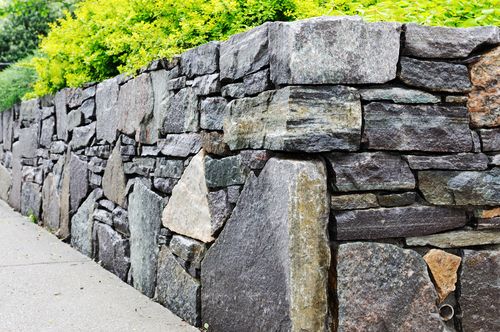
| Rubble Masonry | Rustic/Cottage | Uses natural, unshaped stones for organic charm. | Thicker mortar joints; can look “busy” if poorly executed. | Medium |
| Mosaic (Web) | Modern Custom | Unique geometric patterns; very artistic. | Difficult to maintain structural bond lines. | High |
| Dry Stack | Heritage/Landscaping | Natural drainage; no mortar required. | Height limitations; requires skilled artisans. | High |
| Thin Veneer | Standard Remodel | Lightweight; installs over existing siding. | Not structural; requires robust moisture barrier. | Low-Medium |
Choosing the right path requires evaluating site-specific constraints. If a project involves an older home with a limited foundation, opting for top stone veneer plans is often the most logical choice because it minimizes the dead load on the structure. Conversely, a new build with a heavy concrete foundation might benefit from the thermal mass and prestige of full-bed ashlar masonry, while exploring top stone veneer plans can reveal more accessible alternatives for secondary structures.
Ashlar: The Formal Standard
Ashlar masonry consists of stones that have been “dressed” or cut into rectangular shapes. This style is often used in government buildings and grand estates. Within this category, there is “coursed ashlar,” where stones are laid in horizontal rows of equal height, and “random ashlar,” where heights vary. The precision of the joints—often as thin as 1/8th of an inch—creates a sense of permanence and order.
Rubble: The Organic Approach
Rubble masonry uses stones as they are found in nature or with minimal shaping. “Uncoursed rubble” is the most primitive form, appearing like a collection of stones gathered from a field. “Square rubble” involves roughly squaring the edges to allow for tighter joints. This approach is highly valued for its texture and its ability to blend a home into a natural landscape.
Real-world Scenarios And Decision Trees
Applying stone masonry examples to real-world remodels involves navigating a series of logistical and environmental challenges. Every decision has second-order consequences that affect the longevity and cost of the project. A professional approach involves anticipating these outcomes before the first stone is laid.
The Coastal Exposure Scenario
In a coastal remodel, salt spray and high humidity are the primary failure modes. Using a highly porous limestone or a mortar with high lime content can lead to rapid erosion. The decision tree here favors dense igneous rocks like granite and the use of stainless steel wall ties. The second-order consequence of choosing a cheaper, softer stone in this environment is a facade that requires repointing every five years instead of every fifty.
The Seismic Zone Consideration
In regions prone to earthquakes, heavy structural stone can be a liability. The applied logic dictates using thin veneer systems attached to a flexible wood-frame structure. By reducing the mass of the stone, the lateral forces during a tremor are minimized. The trade-off is that the system relies entirely on the mechanical fasteners and the waterproof membrane, making the quality of the installation crew the most critical factor.
The Historic Restoration Project
When remodeling an 18th-century stone farmhouse, the goal is often “invisible” intervention. Using modern Portland cement on old, soft stones is a common error; the cement is harder than the stone, causing the stone to shatter during thermal expansion. The professional choice is a hydraulic lime mortar that matches the original’s flexibility. The consequence of this decision is a slower cure time but a structure that remains intact for another century.
Planning, Cost, And Resource Dynamics
The financial reality of masonry is that labor often accounts for 60% to 75% of the total project cost. Because stone is heavy and irregular, it cannot be “installed” like vinyl; it must be “crafted.” Understanding the direct and hidden costs is essential for any realistic exterior remodel budget.
| Category | Entry-Level Scenario | Professional Standard | Enterprise/High-End | Key Nuance |
|---|---|---|---|---|
| Material Sourcing | Local fieldstone or “boneyard” leftovers. | Quarried, palletized natural stone. | Custom-cut, imported exotic stone. | Shipping costs often exceed material costs. |
| Labor Expertise | General contractor with masonry experience. | Specialized masonry subcontractor. | Master stonemason with artisan portfolio. | Higher skill reduces waste and future repairs. |
| Prep Work | Standard house wrap and metal lath. | Liquid-applied air/water barrier + rainscreen. | Engineered steel support systems. | Drainage depth is the primary longevity driver. |
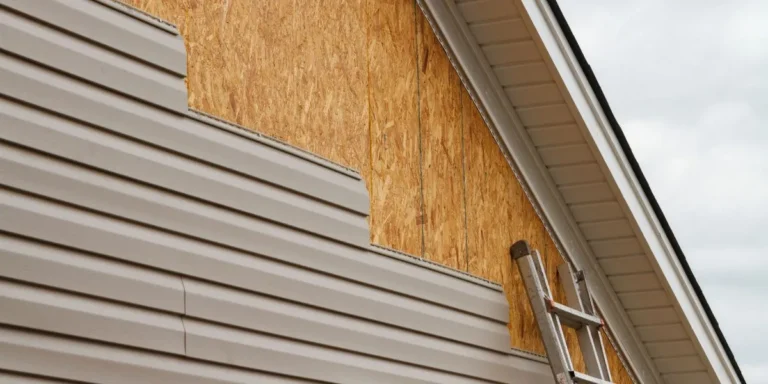
Homeowners often compare these costs to best exterior siding options to weigh long-term ROI. While stone has a higher upfront cost than wood or fiber cement, its lifespan is measured in decades rather than years. “Cheap” masonry often leads to expensive failures, such as water infiltration that rots the underlying wall studs, necessitating a complete tear-down and rebuild later.
Hidden Costs Of Masonry
Beyond the stone and mortar, there are significant logistical costs. Heavy machinery is often required for staging and lifting. Scaffolding must be more robust than that used for painting. Furthermore, the weight of the stone may require structural engineers to evaluate the existing foundation or floor joists. These professional evaluations are an investment in safety that prevents the house from settling unevenly under the new weight.
Tools, Strategies, And Ecosystems
The professional toolkit for masonry has evolved from simple hammers and chisels to a complex ecosystem of laser levels, diamond-blade saws, and specialized chemical admixtures. Each tool solves a specific problem related to precision, speed, or durability.
Precision Cutting And Shaping
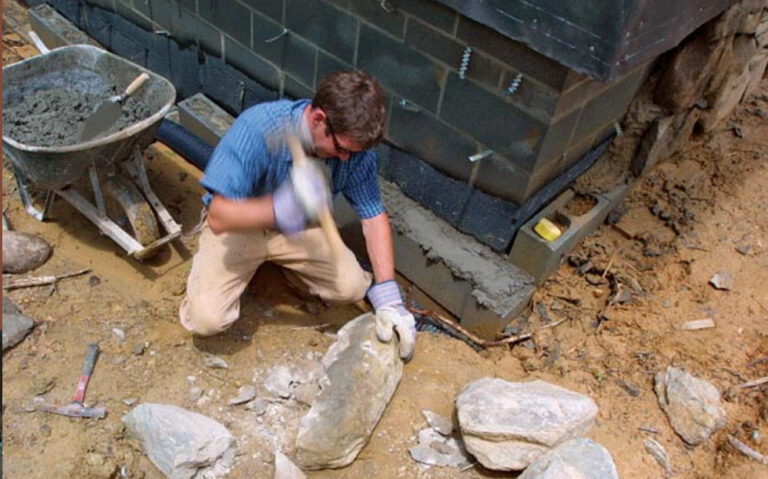
The real problem in masonry is achieving a tight fit without losing the stone’s natural character. While wet saws allow for perfect 90-degree cuts, they can make a wall look “sterile.” Professionals often use “pitching tools” and “carbide-tipped chisels” to hand-texture the edges of machine-cut stones. This strategy combines the speed of modern technology with the soul of traditional craft.
The Admixture Ecosystem
Modern mortars are rarely just sand and cement. They are part of a chemical ecosystem that includes plasticizers for workability, accelerators for cold-weather masonry, and integral water repellents. The hidden limitation here is “over-engineering”; adding too many chemicals can sometimes interfere with the bond between the stone and the mortar. Professionals must balance these additives based on the specific porosity of the stone being used.
Digital Layout And Planning
Advanced stone masonry examples are often planned using 3D modeling. This allows for the “pre-cutting” of stones at the quarry, reducing on-site dust and waste. This integration into a larger BIM (Building Information Modeling) system ensures that the masonry interacts perfectly with other exterior components like windows and rooflines. Without this systemic planning, the stone can often look like an afterthought rather than an integral part of the architecture.
Risk Landscape And Failure Modes
The failure of stone masonry is rarely sudden; it is usually a “slow-motion” catastrophe caused by the compounding of small errors. A risk taxonomy helps identify where projects go wrong and how to implement practical mitigations.
Structural Failure Modes
The most common structural error is the lack of adequate wall ties. These are metal strips that pin the stone veneer to the backup wall. If they are spaced too far apart or are made of corrosive material, the stone facade can literally peel away from the house. Mitigation involves rigorous adherence to local building codes, which typically require a tie every 2 to 3 square feet of wall area.
Operational And Human Errors
Human error often manifests in poor mortar mixing or “smearing” the stone faces. If mortar is too wet, it shrinks excessively, creating micro-cracks that allow water in. If it’s too dry, it won’t bond. Furthermore, failing to clean the stones as they are laid can lead to permanent staining. Practical mitigation involves using a “clean-as-you-go” protocol and strictly measuring the water-to-cement ratio for every batch of mortar.
The Efflorescence Problem
Efflorescence is the white, powdery salt deposit that often appears on new masonry. While it’s not always a structural failure, it indicates that water is moving through the wall and leaching minerals. This can be mitigated by using clean, washed sand and potable water in the mortar mix, and by ensuring that the wall has proper drainage to prevent it from remaining saturated.
Governance, Maintenance, And Sustainability
Static systems fail because buildings are constantly moving due to thermal changes and soil shifts. Long-term mastery of stone masonry examples requires “Dynamic Adaptation”—the understanding that the wall will change over time and must be maintained to preserve its integrity.
The Maintenance Lifecycle
Preserving quality requires a structured review cycle. Addressing minor cracks early prevents the type of degradation seen when you need to manage siding rot in traditional wood structures. Stone is resilient, but the joints are the “sacrificial” part of the system designed to be replaced as they wear out.
- Annual Inspection: Check for hairline cracks in mortar and blocked weep holes.
- Bi-Annual Cleaning: Use low-pressure water and soft brushes to remove organic growth like moss or algae.
- Decade Review: Inspect the integrity of sealants around windows and doors where they meet the stone.
- 25-Year Repointing: Scrape out and replace failing mortar joints to restore structural and aesthetic integrity.
Sustainability And Compliance
Masonry is inherently sustainable due to its longevity and recyclability. However, modern governance also looks at the “embodied carbon” of the material. Sourcing stone from local quarries reduces the environmental impact of transportation. Furthermore, compliance with modern energy codes requires integrating high-performance insulation behind the masonry, creating a “smart wall” that is both beautiful and thermally efficient.
Measurement, Kpis, And Evaluation
Proving the success of a masonry project involves both quantitative metrics and qualitative visual indicators. For a professional, success is defined by how the wall performs under environmental stress over time.
Leading Vs. Lagging Indicators
A leading indicator of success is the “bond strength” of the mortar during installation and the consistency of the joint depth. If the mason is consistently hitting the specified PSI (pounds per square inch) in their mortar batches, the wall is likely to succeed. A lagging indicator is the absence of water penetration or structural movement five years after completion. Success is proven through documentation of material specs and photographic evidence of the drainage systems installed behind the stone.
Qualitative Standards Of Excellence
To a layperson, success is “it looks good.” To a professional, it’s about “plumb, level, and square.” A high-quality masonry project will show no “lippage” (where one stone sticks out further than its neighbor) and will have consistent mortar colors across different batches. The joints should be “tooled” to a specific shape (like a V-joint or a concave joint) that sheds water away from the wall’s interior.
Common Misconceptions And Myths
Myths about masonry persist because stone is so fundamentally different from modern lightweight building materials. These misconceptions can lead to poor planning and unrealistic expectations during an exterior home remodel.
- Myth: Stone is a great insulator. Reality: Stone has high thermal mass but low R-value (insulation). It stores heat but doesn’t stop it from passing through.
- Myth: You can’t put stone on a wood-framed house. Reality: Thin veneer and proper engineering make this very common and safe.
- Myth: Mortar is just “glue.” Reality: Mortar is a structural component that cushions stones and manages moisture movement.
- Myth: Sealed stone is always better. Reality: Many stones need to breathe; sealing them can trap moisture and cause spalling.
- Myth: Darker stone makes a house hotter. Reality: Thermal mass often regulates temperature better than color alone.
- Myth: Real stone is always better than manufactured stone. Reality: High-quality manufactured stone can be more consistent and easier to install in specific weight-sensitive applications.
Ethical, Contextual, And Practical Limits
There are times when stone masonry is not the right choice. Ethics in masonry involve sourcing materials responsibly and being honest about the limitations of a building’s structure. For example, installing heavy stone on a hillside home with poor soil stability can be an engineering risk that outweighs the aesthetic benefit.
The “gray areas” often involve historic replicas. Is it better to use “real” stone that is shipped from halfway across the world, or “local” stone that doesn’t quite match the historic color? The current era prioritizes regional sourcing and carbon footprint reduction over perfect aesthetic matching. Practically, stone masonry examples should be constrained by the budget; it is better to have a perfectly executed small stone accent than a poorly constructed, large-scale facade that will fail within a decade.
Conclusion: Logic Synthesis
The successful integration of stone masonry examples into an exterior remodel is a balance between the artistic judgment of the mason and the systemic process of modern engineering. Stone offers a sense of permanence and value that few other materials can match, but it requires a deep understanding of moisture management, structural bonding, and long-term maintenance. By viewing stone not just as a finish, but as a complex living system, homeowners and professionals can create facades that are as resilient as they are beautiful. The ultimate goal of masonry is to build something that doesn’t just look like it belongs in the landscape, but acts as a permanent extension of it.
Frequently Asked Questions
What Is The Difference Between Natural Stone And Manufactured Stone Veneer?
Natural stone is quarried from the earth and offers unique variations in color and texture that cannot be replicated. Manufactured stone is cast from concrete and pigments to look like stone; it is lighter and often cheaper to install, but it may fade over time and lacks the extreme durability of the natural material.
How Much Weight Does Stone Masonry Add To A House?
Full-bed stone can weigh between 40 and 60 pounds per square foot, which requires a concrete ledge on the foundation for support. Thin veneer is significantly lighter, usually weighing less than 15 pounds per square foot, allowing it to be installed on standard wall structures without additional foundation work.
Do I Need To Seal My Stone Exterior?
Sealing depends on the stone type and the environment. Porous stones like limestone may benefit from a breathable “penetrating” sealer to prevent staining, but many stones, like granite or fieldstone, do not require it. Always use a vapor-permeable product to ensure moisture can still escape the wall.
Can Stone Masonry Be Installed In The Winter?
Yes, but it requires “cold-weather masonry” protocols. This involves heating the sand and water, and using “tents” and heaters to keep the wall temperature above 40 degrees Fahrenheit during the curing process to prevent the mortar from freezing and losing its strength.
What Is The Most Durable Type Of Stone For An Exterior Remodel?
Igneous rocks like granite and basalt are the most durable due to their high density and resistance to acid rain and freeze-thaw cycles. Sedimentary rocks like sandstone and limestone are also popular but are generally softer and more prone to weathering over long periods.