How To Reduce Siding Replacement Cost: Professional Tips
How to reduce siding replacement cost is a primary objective for property owners aiming to enhance curb appeal without overextending their financial resources. Understanding the variables that influence labor, materials, and logistics allows for a more controlled renovation process. This guide examines the strategic pivots necessary to achieve professional-grade results on a optimized budget.
The exterior envelope serves as both a protective barrier and a significant aesthetic asset. While high-end materials offer longevity, the financial burden of a full replacement can be daunting. Navigating the intersection of durability and affordability requires a nuanced understanding of modern construction practices and market dynamics.
Industry professionals often emphasize that the initial quote is rarely the final expenditure. By identifying hidden cost drivers early, homeowners can mitigate unexpected financial strain. This analytical approach ensures that every dollar spent contributes directly to the long-term integrity and value of the residence.
How To Reduce Siding Replacement Cost
To conceptualize how to reduce siding replacement cost, one must view the home as a complex ecosystem of interdependent layers. Reducing expenses is not merely about choosing the cheapest panel available at a local warehouse. Rather, it involves a calculated assessment of material lifespan, installation complexity, and regional climate demands.
An effective analogy is comparing home siding to a high-performance outdoor jacket. A budget-friendly shell might look identical to a premium version, but the underlying seams and zippers determine its ultimate utility. In the context of siding, the “seams” are the flashing and house wrap that prevent moisture intrusion.
Many beginners mistakenly believe that labor is a fixed cost that cannot be negotiated or optimized. Conversely, professionals know that project timing and site preparation significantly influence contractor efficiency. By streamlining the workspace and scheduling during off-peak windows, the labor component of the total bill becomes more manageable.
Strategic material selection is the most visible way to control spending. However, the true mastery of cost reduction lies in preventing future repairs. A slightly higher investment in moisture management today can prevent thousands of dollars in structural remediation five years down the line.
Historical Shifts In Exterior Cladding
Historically, residential siding was limited to locally sourced timber or heavy masonry. These materials required constant maintenance and specialized labor, keeping costs relatively high for the average homeowner. The introduction of aluminum in the mid-20th century marked the first major shift toward industrialized, low-maintenance alternatives.
The subsequent rise of polyvinyl chloride (vinyl) siding in the 1970s revolutionized the market by offering a lightweight and affordable option. While early iterations suffered from fading and brittleness, modern polymer technology has improved significantly. These advancements have fundamentally changed how to reduce siding replacement cost by providing high-durability options at lower price points.
The Move Toward Engineered Solutions
In the current era, engineered wood and fiber cement have emerged as the standard for those seeking a balance between cost and performance. These materials replicate the look of natural cedar but offer superior resistance to pests and fire. They represent a middle ground that avoids the premium price of natural stone while outperforming entry-level plastics.
Modern standards also place a heavier emphasis on the R-value, or thermal resistance, of the siding system. Building codes now often require integrated insulation layers that were non-existent in previous decades. This shift means that while the upfront cost might be higher, the operational savings on energy bills contribute to a lower total cost of ownership.
Modern Professional Standards Vs Outdated Assumptions
Old assumptions often lead to poor financial decisions during a remodel. For instance, many still believe that adding a second layer of siding over the old one is a viable way to save money. Modern building science contradicts this, as “layering” often traps moisture and accelerates the decay of the underlying wooden structure.
Current professional standards prioritize a “clean slate” approach where the old material is completely removed. This allows for a thorough inspection of the sheathing. When homeowners understand the Best Exterior Siding Options: A Professional Guide To Roi, they can choose materials that offer the best long-term financial return rather than the lowest immediate price.
Conceptual Frameworks For Cost Management
The Lifecycle Costing (LCC) framework is essential for anyone looking at how to reduce siding replacement cost over a twenty-year horizon. This model accounts for initial purchase, installation, maintenance, and eventual disposal. A material that is 20% cheaper today but requires painting every five years is mathematically more expensive than a maintenance-free alternative.
Another useful mental model is the “Critical Path Method” of project management. By identifying which tasks must be completed before others—such as repairing window flashing before installing siding—homeowners avoid the cost of “re-work.” Doing things in the correct sequence is a silent but powerful cost-saving strategy.
The Law Of Diminishing Returns In Siding
There is a specific point where spending more on premium siding features no longer adds proportional value to the home. Exotic wood species or custom-colored metals often fall into this category. For most residential properties, mid-grade materials provide 90% of the aesthetic and functional benefits at 50% of the cost of luxury options.
Professional installers use a “waste-minimization” heuristic when ordering materials. By choosing panel lengths that match the home’s dimensions, they reduce the amount of scrap material that ends up in a landfill. Homeowners can apply this by selecting standard profiles that are readily available in local inventories, avoiding custom shipping fees.
Key Types And Material Nuances
The choice of material is the largest variable in the financial equation. Vinyl remains the market leader for those prioritizing low entry costs and minimal upkeep. It is available in various thicknesses; thicker grades are more impact-resistant and typically represent a better value-to-cost ratio than the thinnest “builder-grade” options.
Fiber cement, composed of sand, cement, and cellulose fibers, offers significant fire resistance and a traditional look. While the material cost is moderate, the labor cost is higher due to its weight and the need for specialized cutting tools. Homeowners must weigh these factors when determining the most efficient path forward.
| Variation | Target Audience | Core Advantage | Trade-offs | Relative Complexity |
|---|---|---|---|---|
| Standard Vinyl | Budget-conscious | Lowest initial price | Susceptible to heat | Low |
| Fiber Cement | Value-seekers | Fire & pest proof | High labor cost | High |
| Engineered Wood | Aesthetic-focused | Natural wood look | Requires painting | Medium |
| Aluminum | Modernists | Recyclable/Durable | Dents easily | Medium |
| Natural Cedar | Luxury Market | High curb appeal | High maintenance | Very High |
Decision Logic For Material Selection
Choosing the right material depends on the planned duration of homeownership. If the goal is to sell the property within three years, a mid-grade vinyl provides the best immediate visual boost for the lowest spend. However, for a “forever home,” investing in fiber cement or stone veneer may be more prudent.
When considering masonry elements, homeowners should look into Top Stone Veneer Plans: A Professional Exterior Remodel Guide to see how accents can increase value without the cost of full stone walls. Mixing materials—using premium options on the front facade and standard options on the sides—is a professional secret for maximizing visual impact while containing costs.
Real-world Scenarios And Applied Logic
Consider a scenario where a homeowner discovers significant rot after removing old cedar shingles. The immediate instinct might be to patch the area and move on to save money. However, a professional would argue that replacing the damaged sheathing now is the only way to truly reduce the long-term siding replacement cost.
In another scenario, a homeowner in a high-wind coastal zone might be tempted by cheap vinyl. The “second-order consequence” here is the potential for panels to blow off during a storm, leading to emergency repair fees. In this environment, a reinforced siding system with a higher wind rating is actually the budget-friendly choice because it avoids catastrophic failure.
Partial Vs Full Replacement Strategies
Sometimes, the most effective way to manage a budget is to perform a partial replacement. If only the south-facing side of a home is damaged by sun exposure, replacing just that elevation can save thousands. The challenge lies in color-matching the old material, which may have faded over several years.
Professionals often suggest using this opportunity to create a “two-tone” look. By using a slightly different shade or a complementary material on the new section, the mismatch looks intentional rather than accidental. This creative pivoting is a hallmark of sophisticated cost management in exterior remodeling.
Addressing Structural Failure Points
Failure to address flashing around windows and doors is a common error that leads to systemic failure. When water infiltrates behind new siding, it rots the wall studs and creates mold. The cost to fix these internal issues far exceeds the savings gained by skipping high-quality flashing tapes during the initial install.
Every homeowner should understand How To Manage Siding Rot: A Professional Restoration Guide to identify early warning signs. Catching rot before it spreads to the main structural components is perhaps the single most effective way to avoid the most expensive tier of replacement projects.
Planning And Resource Dynamics
Resource planning involves more than just a trip to the hardware store. It requires a detailed inventory of fasteners, J-channels, corner posts, and soffit vents. Buying these components in “contractor packs” rather than individual pieces can result in a 15% to 20% price reduction across the entire project.
Timing the market is another critical strategy. Most exterior contractors are swamped during the spring and summer months, leading to premium pricing. Scheduling a replacement for the late fall or early winter—assuming the weather permits—can often yield significant discounts as crews look to fill their schedules.
| Category | Entry-Level Scenario | Professional Standard | Enterprise/High-End | Key Nuance |
|---|---|---|---|---|
| Material Cost | $2.00 – $4.00 /sq ft | $5.00 – $9.00 /sq ft | $12.00+ /sq ft | Bulk buys save 10% |
| Labor Rates | General Handyman | Licensed Siding Crew | Specialized Artisans | Insured crews cost more |
| Permit Fees | Local Minimum | Standard Building | Historic District | Varies by municipality |
| Waste Disposal | Bagster/DIY Haul | 10-20 Yard Roll-off | Multiple Dumpsters | Weight limits apply |
Budget-friendly Strategies And Waste Reduction
To further reduce the financial footprint, homeowners should consider “site-management” as a form of currency. If you can handle the disposal of the old siding yourself, you can often negotiate the contractor’s “demolition and hauling” fee off the final quote. This requires physical labor and a vehicle, but it keeps cash in your pocket.
Another often overlooked area is the “mobilization fee.” Contractors charge for the time it takes to get their equipment to your site. If you coordinate with neighbors to have several houses done at once, the contractor can often waive or reduce these fees because their crew stays in one location for a longer duration.
Tools And Professional Strategies
The real problem that professional tools solve is not just “attachment” but “accuracy.” Laser levels and siding gauges ensure that every row is perfectly horizontal. Without these, a DIY attempt often results in “wavy” siding that looks unprofessional and may even leak, leading to costly corrections.
Pneumatic siding nailers are the industry standard for a reason. They allow for consistent depth of drive, which is vital for vinyl siding. Because vinyl expands and contracts with temperature changes, the nails must not be driven flush; the panel needs to “hang” on the nail. Misunderstanding this technical nuance is a leading cause of buckling panels.
Integrating Multiple Projects For Efficiency
Efficiency is often found in the overlap of different trades. If the scaffolding is already up for a siding project, it is the perfect time to address the roof or windows. Homeowners should Compare Roof Replacement Materials: A Professional Roi Guide to see if a combined project makes fiscal sense.
Combining projects reduces the “soft costs” of remodeling, such as permit applications and site protection setup. While the total bill is higher, the “cost per unit of work” drops significantly. This holistic view of home maintenance is how savvy investors manage their real estate portfolios.
Risk Landscape And Failure Modes
The most dangerous risk in a siding project is “incomplete moisture management.” A failure to overlap the house wrap correctly (shingle fashion) creates a path for water to flow behind the barrier. This small human error can lead to structural rot that remains hidden for years until it becomes a five-figure disaster.
Another failure mode is “improper fastener selection.” Using interior-grade nails on exterior siding will lead to rust streaks and eventual detachment. Stainless steel or hot-dipped galvanized fasteners are mandatory. Saving fifty dollars on nails is a classic example of a “cheap fix” that leads to an expensive failure.
Compounding Financial Leaks
Small errors in estimation can also lead to financial leaks. Ordering too much material results in waste while ordering too little leads to “short-order” delivery fees and project delays. Professionals use detailed take-off software or manual “squaring” techniques to ensure accuracy within a 5% margin.
Inflation in material costs is a modern risk that requires proactive management. Locking in a price with a deposit can protect against mid-project price hikes. Furthermore, checking for local tax credits or energy-efficiency rebates can offset the cost of premium insulated siding options.
Governance And Long-term Maintenance
Static systems are doomed to fail because houses are dynamic; they settle, shift, and respond to the climate. A professional maintenance schedule is the only way to ensure the siding reaches its full intended lifespan. This “governance” of the home’s exterior prevents the need for early replacement.
- Annual inspection of all caulking joints around windows and doors.
- Bi-annual cleaning with a soft-bristled brush and mild detergent to remove organic growth.
- Immediate replacement of any cracked or loose panels to prevent wind-driven rain ingress.
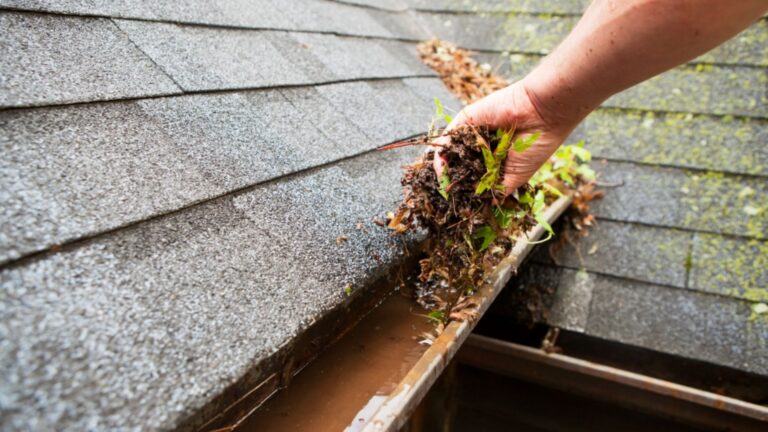
- Checking that gutters are clear to prevent water from overflowing onto the siding face.
- Ensuring a minimum 6-inch clearance between the siding and the soil or mulch.
Preserving Quality Over Time
Sustainability in siding isn’t just about the “greeness” of the material; it’s about how long the material stays on the house. A vinyl panel that lasts 50 years is more sustainable than a natural material that rots in 10. Focusing on durability is the most environmentally and fiscally responsible approach.
As the building ages, owners should document every repair and the specific paint colors or material brands used. This “house manual” is invaluable when it comes time to sell or when a small repair is needed. It eliminates the guesswork and the cost of hiring a consultant to identify old materials.
Measurement And Tracking Success
How do you know if your efforts to reduce siding replacement cost were successful? The most obvious “lagging indicator” is the final invoice vs. the initial budget. However, “leading indicators” like the frequency of change orders and the amount of scrap material in the dumpster provide a more nuanced view of project efficiency.
Another KPI (Key Performance Indicator) is the home’s energy consumption. If you installed insulated siding, a decrease in kwh usage during peak summer or winter months proves the investment’s efficacy. A professional contractor should be able to provide a “post-mortem” report detailing the materials used and the warranties in effect.
Proving Value To Stakeholders
If you are a professional working for a client, or a homeowner justifying the cost to a spouse, data is your best tool. Show the comparison between the cost of the siding and the projected increase in home equity. Most siding projects recover between 65% and 80% of their cost in added home value immediately upon completion.
Detailed photo documentation of the “hidden” work—the house wrap, the flashing, the tape—is the best way to prove quality. This “behind-the-scenes” evidence is a powerful negotiating tool when it comes time to sell the property. It assures the buyer that the home was remodeled to professional standards, not just “flipped” for aesthetics.
Common Misconceptions And Myths
One common myth is that “vinyl siding is maintenance-free.” While it doesn’t need paint, it does need cleaning. Dust and pollen can settle on the surface, feeding mold and mildew. Neglecting this leads to permanent staining and a degraded appearance that hurts property value.
Another misconception is that “thicker siding is always better.” While thickness aids in impact resistance, the quality of the “hem” (the part that nails to the wall) and the locking mechanism are often more important for wind resistance. A thick panel with a weak lock is more likely to fail than a mid-grade panel with a reinforced double-contour hem.
The Truth About Diy Siding
Many homeowners believe that DIY is the best way to reduce siding replacement cost. While you save on labor, you lack the professional’s “bulk discount” on materials and the speed of a specialized crew. Often, a DIY project takes four times longer, and the cost of tool rental and potential mistakes can negate the labor savings.
Furthermore, many manufacturer warranties are only valid if the product is installed by a certified professional. If a DIY-installed panel fails, the homeowner has no recourse. It is often more cost-effective to hire a professional for the main installation while the homeowner handles the “unskilled” labor like debris cleanup or site prep.
Ethical And Practical Limits
There are certain areas where cutting costs is ethically and practically questionable. Skipping fire-rated materials in high-risk wildfire zones to save money is a dangerous gamble. Similarly, using non-breathable barriers in humid climates can lead to “sick building syndrome” and mold growth that threatens the health of the occupants.
Budget constraints are real, but they should never override structural safety. If the budget is so tight that essential flashing or rot repair must be skipped, it is often better to delay the project entirely. A poorly done siding job is a liability, not an asset.
The Constraint Of Regional Trends
Homeowners must also respect the architectural “vernacular” of their neighborhood. Installing high-end stone veneer in a neighborhood of modest vinyl-sided ranch houses may result in “over-improvement.” You likely won’t see a return on that investment because the house will be priced out of the local market.
Conversely, using the cheapest vinyl in a luxury historic district may lead to fines from a Homeowners Association (HOA) or a significant drop in resale value. The “right” cost-reduction strategy is always context-dependent. It requires a balance between personal budget and the economic realities of the local real estate market.
Conclusion: Synthesizing The Strategy
The mastery of how to reduce siding replacement cost lies in the delicate balance between material quality and logistical efficiency. It is not a race to the bottom of the price list, but a calculated journey toward maximum value. By understanding the science of the building envelope, homeowners can make decisions that protect both their families and their finances.
Success in an exterior remodel is the result of disciplined planning and a refusal to ignore the technical details. Whether through seasonal scheduling, material pivoting, or integrated project management, the opportunities for savings are abundant for those who look beyond the initial quote. A home’s exterior is its first line of defense; maintaining it wisely is the hallmark of a sophisticated property owner.
Ultimately, the most expensive siding is the one that has to be replaced twice. Investing in proper installation and moisture management today ensures that the facade remains a source of pride rather than a drain on resources. The intersection of engineering and economics is where the best home improvements are made.
Frequently Asked Questions
What Is The Most Cost-effective Siding Material For 2026?
Vinyl remains the most cost-effective choice for immediate savings due to low material costs and rapid installation. However, fiber cement often provides better long-term value in regions prone to extreme weather or fire risks.
Can I Save Money By Siding Over My Old Material?
While this saves on demolition and disposal fees initially, it is generally discouraged. Layering siding can hide rot, trap moisture, and make it difficult to properly flash windows, often leading to more expensive repairs later.
What Is The Cheapest Time Of Year To Replace Siding?
Late fall and early winter are typically the best times to find labor discounts. Contractors are often looking to fill their schedules before the winter freeze, leading to more competitive quotes than in the busy spring season.
How Much Does Labor Typically Contribute To Siding Costs?
Labor generally accounts for 40% to 60% of the total project cost. Factors such as the height of the home, the complexity of the architecture, and the weight of the chosen material (like heavy fiber cement) will influence this percentage.
Do I Need A Permit To Replace My Home’s Siding?
In most jurisdictions, a building permit is required for siding replacement to ensure compliance with local fire and energy codes. While permits cost money, skipping them can lead to fines and complications during a future home sale.